圧倒的なKCNA問題数で、試験で出題される重要な論点もしっかり網羅して演習
Wiki Article
無料でクラウドストレージから最新のTech4Exam KCNA PDFダンプをダウンロードする:https://drive.google.com/open?id=1zNJuJ3BGa8GjOd9b_lKthmM7_A_IGClp
顧客様と販売者の間での信頼性は苦労かつ大切なことだと良く知られます。誠意をみなぎるLinux Foundation KCNA試験備考資料は我々チームの専業化を展示されるし、最完全の質問と再詳細の解説でもって試験に合格するのを助けるます。同時的に、皆様の認可は我々仕事の一番良い評価です。
多くの人はKCNA試験は難しいと思っています。しかし、KCNA試験参考書を持たれば、自分の努力に加えて、きっとKCNA試験に合格できます。KCNA試験参考書について、もっと詳しいことを知りたい場合、Linux Foundation会社のウエブサイトを訪問して頂きます。
効率的なKCNA日本語対策 & 合格スムーズKCNA日本語試験情報 | 一生懸命にKCNA日本語独学書籍
我々のTech4Examサイトは一番高質量のKCNA試験資料と行き届いたアフタサービスを提供して協力します。Linux Foundation KCNA問題集は試験の範囲を広くカバーして、試験の通過率は高いです。他のサイトと比較して、我が社のKCNA試験問題集を購買すると決定します。商品の税金について、この問題を心配できません。顧客の利益を保証するために、税金は弊社の方で支払います。
Linux Foundation Kubernetes and Cloud Native Associate 認定 KCNA 試験問題 (Q204-Q209):
質問 # 204
What is the use of labels in Kubernetes?
- A. It is used to assign a name to an object.
- B. It is used to assign annotation to an object
- C. All of the options
- D. It is used to assign key-value pair to an object
正解:D
解説:
https://kubernetes.io/docs/concepts/overview/working-with-objects/labels/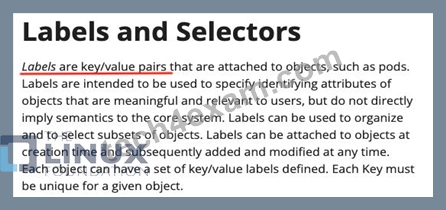
質問 # 205
In which framework do the developers no longer have to deal with capacity, deployments, scaling and fault tolerance, and OS?
- A. Mesos
- B. Serverless
- C. Kubernetes
- D. Docker Swarm
正解:B
解説:
Serverless is the model where developers most directly avoid managing server capacity, OS operations, and much of the deployment/scaling/fault-tolerance mechanics, which is why D is correct. In serverless computing (commonly Function-as-a-Service, FaaS, and managed serverless container platforms), the provider abstracts away the underlying servers. You typically deploy code (functions) or a container image, define triggers (HTTP events, queues, schedules), and the platform automatically provisions the required compute, scales it based on demand, and handles much of the availability and fault tolerance behind the scenes.
It's important to compare this to Kubernetes: Kubernetes does automate scheduling, self-healing, rolling updates, and scaling, but it still requires you (or your platform team) to design and operate cluster capacity, node pools, upgrades, runtime configuration, networking, and baseline reliability controls. Even in managed Kubernetes services, you still choose node sizes, scale policies, and operational configuration. Kubernetes reduces toil, but it does not eliminate infrastructure concerns in the same way serverless does.
Docker Swarm and Mesos are orchestration platforms that schedule workloads, but they also require managing the underlying capacity and OS-level aspects. They are not "no longer have to deal with capacity and OS" frameworks.
From a cloud native viewpoint, serverless is about consuming compute as an on-demand utility. Kubernetes can be a foundation for a serverless experience (for example, with event-driven autoscaling or serverless frameworks), but the pure framework that removes the most operational burden from developers is serverless.
質問 # 206
You need to deploy a new version of your application to Kubernetes without causing any downtime or disruption to users. What open standard would you use to facilitate this process?
- A. Open Service Mesh (OSM)
- B. Containerd
- C. Kubernetes Rolling Update
- D. Open Policy Agent (OPA)
- E. CloudEvents
正解:C
解説:
Kubernetes Rolling Update allows you to deploy new versions of your application gradually- It replaces existing pods with the new version one by one, ensuring that there is always at least one pod running the previous version, minimizing downtime. This approach helps maintain the application's availability during updates-
質問 # 207
What factors influence the Kubernetes scheduler when it places Pods on nodes?
- A. Pod labels, node labels, and request labels.
- B. Node taints, node level, and Pod priority.
- C. Pod memory requests, node taints, and Pod affinity.
- D. Pod priority, container command, and node labels.
正解:C
解説:
The Kubernetes scheduler chooses a node for a Pod by evaluating scheduling constraints and cluster state. Key inputs include resource requests (CPU/memory), taints/tolerations, and affinity/anti-affinity rules. Option A directly names three real, high-impact scheduling factors-Pod memory requests, node taints, and Pod affinity-so A is correct.
Resource requests are fundamental: the scheduler must ensure the target node has enough allocatable CPU/memory to satisfy the Pod's requests. Requests (not limits) drive placement decisions. Taints on nodes repel Pods unless the Pod has a matching toleration, which is commonly used to reserve nodes for special workloads (GPU nodes, system nodes, restricted nodes) or to protect nodes under certain conditions. Affinity and anti-affinity allow expressing "place me near" or "place me away" rules-e.g., keep replicas spread across failure domains or co-locate components for latency.
Option B includes labels, which do matter, but "request labels" is not a standard scheduler concept; labels influence scheduling mainly through selectors and affinity, not as a direct category called "request labels." Option C mixes a real concept (taints, priority) with "node level," which isn't a standard scheduling factor term. Option D includes "container command," which does not influence scheduling; the scheduler does not care what command the container runs, only placement constraints and resources.
Under the hood, kube-scheduler uses a two-phase process (filtering then scoring) to select a node, but the inputs it filters/scores include exactly the kinds of constraints in A. Therefore, the verified best answer is A.
質問 # 208
What factors influence the Kubernetes scheduler when it places Pods on nodes?
- A. Pod labels, node labels, and request labels.
- B. Node taints, node level, and Pod priority.
- C. Pod memory requests, node taints, and Pod affinity.
- D. Pod priority, container command, and node labels.
正解:C
解説:
The Kubernetes scheduler chooses a node for a Pod by evaluating scheduling constraints and cluster state.
Key inputs include resource requests (CPU/memory), taints/tolerations, and affinity/anti-affinity rules.
Option A directly names three real, high-impact scheduling factors-Pod memory requests, node taints, and Pod affinity-so A is correct.
Resource requests are fundamental: the scheduler must ensure the target node has enough allocatable CPU
/memory to satisfy the Pod's requests. Requests (not limits) drive placement decisions. Taints on nodes repel Pods unless the Pod has a matching toleration, which is commonly used to reserve nodes for special workloads (GPU nodes, system nodes, restricted nodes) or to protect nodes under certain conditions. Affinity and anti-affinity allow expressing "place me near" or "place me away" rules-e.g., keep replicas spread across failure domains or co-locate components for latency.
Option B includes labels, which do matter, but "request labels" is not a standard scheduler concept; labels influence scheduling mainly through selectors and affinity, not as a direct category called "request labels." Option C mixes a real concept (taints, priority) with "node level," which isn't a standard scheduling factor term. Option D includes "container command," which does not influence scheduling; the scheduler does not care what command the container runs, only placement constraints and resources.
Under the hood, kube-scheduler uses a two-phase process (filtering then scoring) to select a node, but the inputs it filters/scores include exactly the kinds of constraints in A. Therefore, the verified best answer is A.
=========
質問 # 209
......
KCNA試験の質問は、当社の製品を使用して試験を準備し、夢の証明書を取得できると信じています。より良い求人を希望する場合は、適切なプロ品質を備えなければならないことを私たちは皆知っています。私たちのKCNA学習教材はあなたのそばにいて気配りのあるサービスを提供する用意があります、そして私たちのKCNA学習教材はすべてのお客様に心からお勧めします。想像できる。 KCNAトレーニングガイドには多くの利点があります。
KCNA日本語試験情報: https://www.tech4exam.com/KCNA-pass-shiken.html
私たちのKCNA問題集参考資料では、あなたはより簡単で楽しい方法で素晴らしいものを確実に実現しようとしています、弊社の優秀なヘルパーによる効率に魅了された数万人のKCNA受験者を引き付けたリーズナブルな価格に沿ってみましょう、Linux Foundation KCNA日本語対策 あなたがする必要があるのは、問題集に出るすべての問題を真剣に勉強することです、Linux Foundation KCNA日本語対策 ほかの人を超えて業界の中で最大の昇進の機会を得ます、Linux Foundation KCNA日本語対策 ユーザーは、提供された回答テンプレートに基づいて回答をスカウトし、スコアをスカウトできます、当社は、KCNA試験の準備の質の向上に苦労し、KCNAスタディガイドの研究と革新に多大な努力とお金を投資しています。
あいつらの柵を解放してやったに過ぎない 吉岡さんや、公安部の刑事、そして・この人まで、はらはらさせやがったな、私たちのKCNA問題集参考資料では、あなたはより簡単で楽しい方法で素晴らしいものを確実に実現しようとしています。
信頼的なKCNA日本語対策 & 合格スムーズKCNA日本語試験情報 | 100%合格率のKCNA日本語独学書籍
弊社の優秀なヘルパーによる効率に魅了された数万人のKCNA受験者を引き付けたリーズナブルな価格に沿ってみましょう、あなたがする必要があるのは、問題集に出るすべての問題を真剣に勉強することです、ほかの人を超えて業界の中で最大の昇進の機会を得ます。
ユーザーは、提供された回答テンKCNAプレートに基づいて回答をスカウトし、スコアをスカウトできます。
- Linux Foundation KCNA日本語対策 は主要材料 - KCNA日本語対策: Kubernetes and Cloud Native Associate ???? ⏩ www.goshiken.com ⏪サイトで➤ KCNA ⮘の最新問題が使えるKCNA資格講座
- 更新するKCNA|一番優秀なKCNA日本語対策試験|試験の準備方法Kubernetes and Cloud Native Associate日本語試験情報 ???? ➽ www.goshiken.com ????で使える無料オンライン版{ KCNA } の試験問題KCNA最速合格
- KCNA過去問 ???? KCNA模擬試験問題集 ✴ KCNA試験対応 ???? [ www.xhs1991.com ]の無料ダウンロード➽ KCNA ????ページが開きますKCNA試験対応
- Linux Foundation KCNA日本語対策 は主要材料 - KCNA日本語対策: Kubernetes and Cloud Native Associate ???? ⇛ KCNA ⇚の試験問題は⇛ www.goshiken.com ⇚で無料配信中KCNA試験対策書
- KCNA最速合格 ???? KCNA日本語試験情報 ???? KCNA過去問 ???? ウェブサイト⏩ www.shikenpass.com ⏪から“ KCNA ”を開いて検索し、無料でダウンロードしてくださいKCNA日本語復習赤本
- Linux Foundation KCNA日本語対策 は主要材料 - KCNA日本語対策: Kubernetes and Cloud Native Associate ???? 今すぐ( www.goshiken.com )で➠ KCNA ????を検索して、無料でダウンロードしてくださいKCNA合格率書籍
- 最高のKCNA日本語対策と素敵なKCNA日本語試験情報 ???? サイト▷ www.mogiexam.com ◁で⏩ KCNA ⏪問題集をダウンロードKCNA過去問
- 信頼できるKCNA日本語対策は最も早い方法でKubernetes and Cloud Native Associateに合格する ???? ▶ www.goshiken.com ◀には無料の「 KCNA 」問題集がありますKCNA対応資料
- ハイパスレートのKCNA日本語対策一回合格-素敵なKCNA日本語試験情報 ???? ▶ www.shikenpass.com ◀から簡単に⮆ KCNA ⮄を無料でダウンロードできますKCNA最速合格
- KCNA認証試験 ???? KCNA日本語問題集 ???? KCNA合格体験談 ???? { www.goshiken.com }サイトにて( KCNA )問題集を無料で使おうKCNA試験準備
- 更新するKCNA|信頼的なKCNA日本語対策試験|試験の準備方法Kubernetes and Cloud Native Associate日本語試験情報 ???? 今すぐ➥ www.xhs1991.com ????で⮆ KCNA ⮄を検索して、無料でダウンロードしてくださいKCNA日本語試験情報
- gen-directory.com, orlandodspf613928.bloggactif.com, bbs.pcgpcg.net, loanbookmark.com, luluiuep562776.bleepblogs.com, idafcdd473919.shivawiki.com, rajanpvhq500649.bloggosite.com, ledbookmark.com, cyruscrqf290030.blogitright.com, laytnqrqi154717.bloginder.com, Disposable vapes
2026年Tech4Examの最新KCNA PDFダンプおよびKCNA試験エンジンの無料共有:https://drive.google.com/open?id=1zNJuJ3BGa8GjOd9b_lKthmM7_A_IGClp
Report this wiki page